
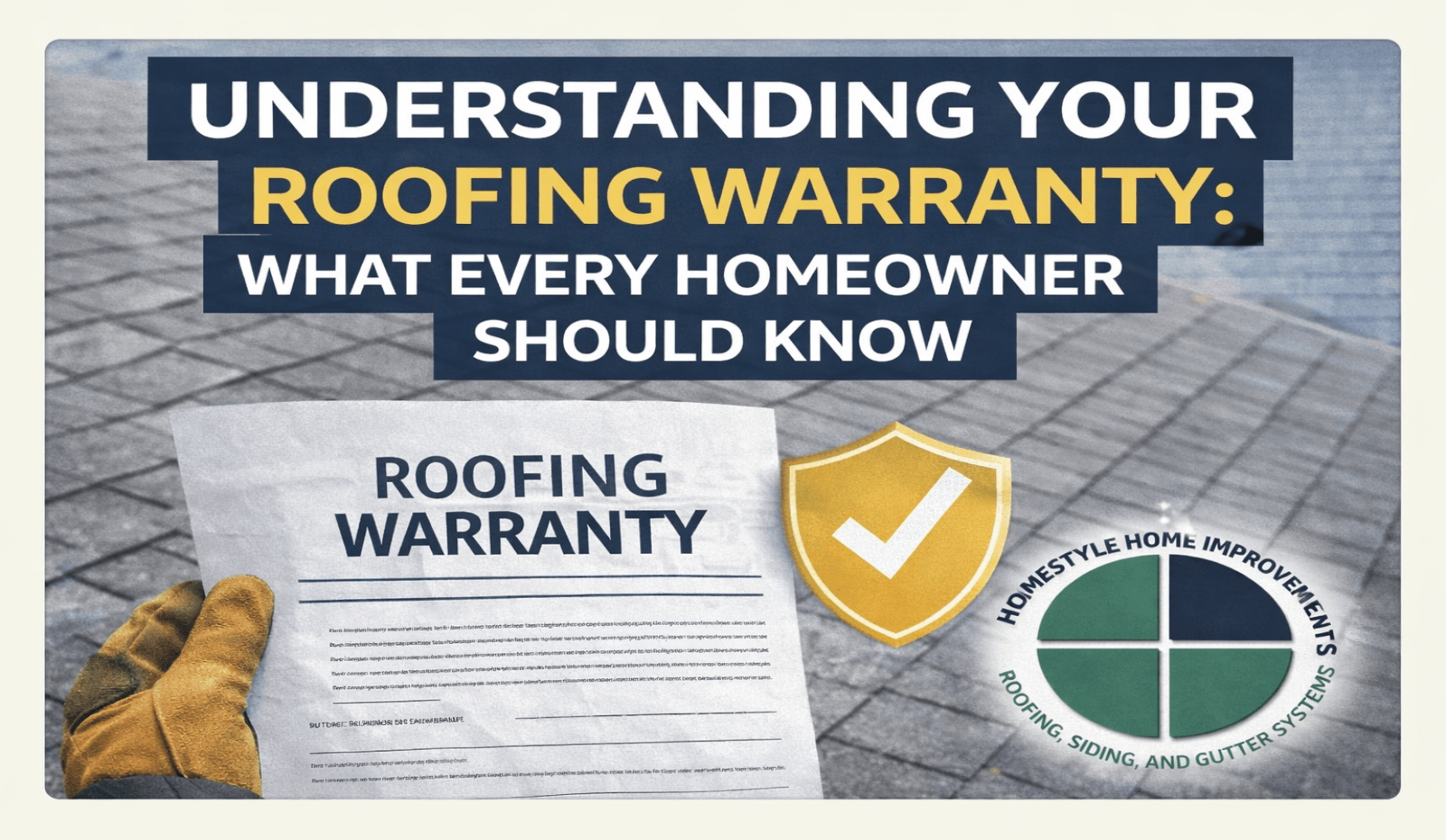
Understanding Your Roofing Warranty: What Every Homeowner Should Know
Roofing Warranty Checklist: What Every Homeowner Should Confirm
- Does your warranty cover both materials and labor?
- How long does the manufacturer’s warranty last?
- Is your roofing contractor certified to offer enhanced warranties?
- What conditions or actions could void the warranty?
- Is the warranty transferable if you sell your home?
- What warranty coverage comes standard, and what upgrades are available?
Understanding Roofing Warranties: What Homeowners Need to Know
When investing in a new roof, most homeowners focus on materials, color, and cost—but one of the most important factors is often overlooked: the roofing warranty. Understanding how roofing warranties work can help protect your home, your finances, and your peace of mind for decades to come.
Not all roofing warranties are the same, and knowing the difference can prevent unexpected expenses down the road.
The Two Main Types of Roofing Warranties
Most roofing systems are protected by two types of warranties: a manufacturer warranty and a workmanship (labor) warranty. Both play a critical role in long-term roof protection.
Manufacturer warranties cover defects in roofing materials, such as shingles or underlayment. These warranties vary by product and manufacturer and often require certified installation to remain valid.
Workmanship warranties cover the quality of the installation itself. Even the best materials can fail if they aren’t installed correctly, which is why labor coverage is just as important as material coverage.
Why Manufacturer Certification Matters
Manufacturer certifications are not just badges—they directly impact the level of warranty coverage a homeowner can receive. As a CertainTeed ShingleMaster™ Preferred contractor, we meet strict requirements for training, installation standards, and ongoing education.
This certification allows us to offer CertainTeed warranties that can provide coverage for up to 50 years, including both materials and labor when eligible systems are installed. These extended warranties offer homeowners long-term protection that goes far beyond standard coverage.
Standard and Optional Warranty Coverage
Every roofing project we complete comes with standard workmanship warranties, ensuring your roof is protected from installation-related issues. In addition, homeowners have the option to upgrade to enhanced manufacturer-backed warranties depending on the roofing system they choose.
These extended warranties can include:
Long-term material defect coverage
Labor coverage backed by the manufacturer
Transferable warranties that add resale value
Peace of mind knowing your investment is protected
Choosing the right warranty depends on your long-term plans for your home, budget, and desired level of protection.
What Can Void a Roofing Warranty?
Many homeowners are surprised to learn that warranties can be voided if certain requirements aren’t met. Common issues include:
Improper installation by non-certified contractors
Poor attic ventilation
Unauthorized roof modifications
Lack of routine maintenance
This is why it’s essential to work with a qualified, certified roofing contractor who installs systems according to manufacturer specifications.
Choosing the Right Warranty for Your Home
The best roofing warranty isn’t always the longest one—it’s the one that fits your home, climate, and long-term goals. A professional roofing contractor should take the time to explain your options clearly and help you select coverage that provides real value, not just fine print.
By working with a certified contractor and choosing high-quality materials, homeowners can ensure their roof is protected for years to come.
Final Thoughts on Roofing Warranties
A roof is one of the largest investments you’ll make in your home, and the right warranty helps protect that investment. Understanding what your roofing warranty covers—and working with a contractor who can offer enhanced protection—can make all the difference.
If you have questions about roofing warranties or want to explore your coverage options, speaking with a trusted roofing professional is always the best place to start.